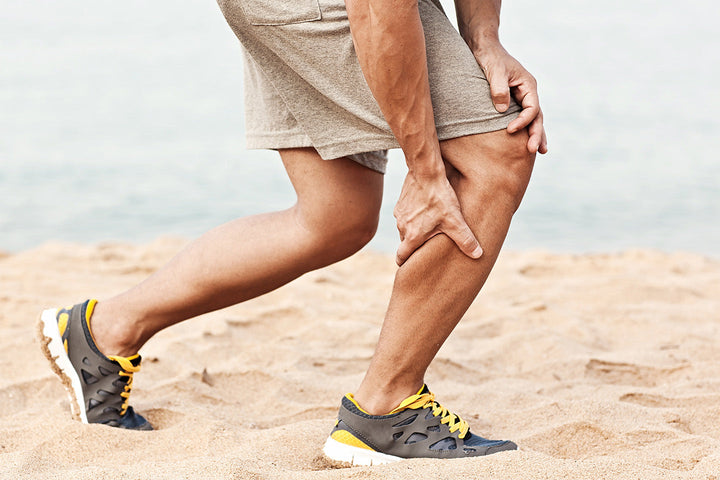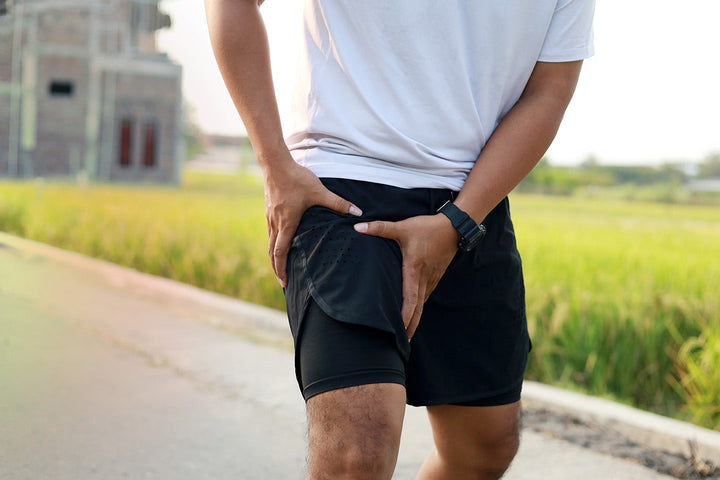

A thigh contusion is a common sports injury that often occurs in contact sports such as football, handball or floorball. The injury is caused by a forceful blow to the front of the thigh, leading to bleeding, pain and stiffness in the muscle.
What is a thigh contusion?
A thigh contusion is a muscle bruise in the thigh, usually affecting the quadriceps muscle at the front of the thigh. It is most commonly caused by a direct blow, such as an opponent's knee. The injury causes localized bleeding within the muscle and can make it difficult to bear weight on the leg. Repeated injuries may lead to scar tissue formation, increasing the risk of recurring problems, and in rare cases an ossification (myositis ossificans) may develop within the muscle.
Common causes & risk factors
A thigh contusion almost always occurs when there is direct force to the thigh, common in intense contact sports involving close combat. The risk increases with inadequate protection, previous injuries to the same area, and repeated blows that lead to scar tissue and impaired muscle function.
Symptoms
- Immediate pain at the time of injury
- Swelling and bruising
- If the muscle or tendon has ruptured, a visible indentation may sometimes be seen below the injured area.
- Stiffness and reduced range of motion, especially in the knee
- Pain during exertion and muscle activation
- Sometimes long-term soreness and recurring problems with repeated injuries
When should you seek medical attention?
If the pain is severe, you have difficulty walking, or if the swelling and bruising do not improve within a few days, you should contact your healthcare provider. If you suspect ossification of the muscle, medical evaluation is required.
Recommended protection & support
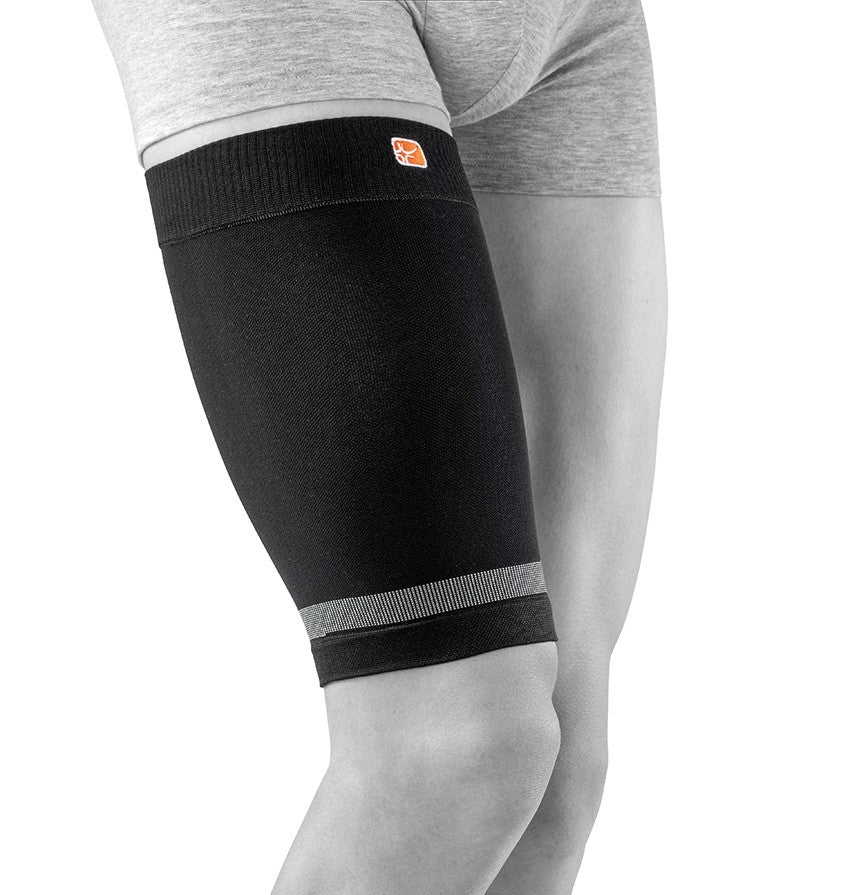
During the acute phase, compression and elevating the leg are important measures to reduce bleeding and swelling. It is also important to begin gentle range-of-motion exercises as soon as possible to improve circulation in the injured area and restore knee mobility. After the acute phase, a warming thigh support can help increase blood circulation, reduce stiffness, and provide support for the muscle. Warming and compressive thigh supports may also help prevent reinjury and facilitate a faster return to activity. Rehabilitation aims to restore as much mobility, strength, and stability as possible.
See supports and braces that can help relieve a thigh contusion
Related injuries
For more information about leg, calf and thigh problems, you can read more in the Injury Guide Legs, and you can also go to the Injury Guide main page to read about other injuries and symptoms.