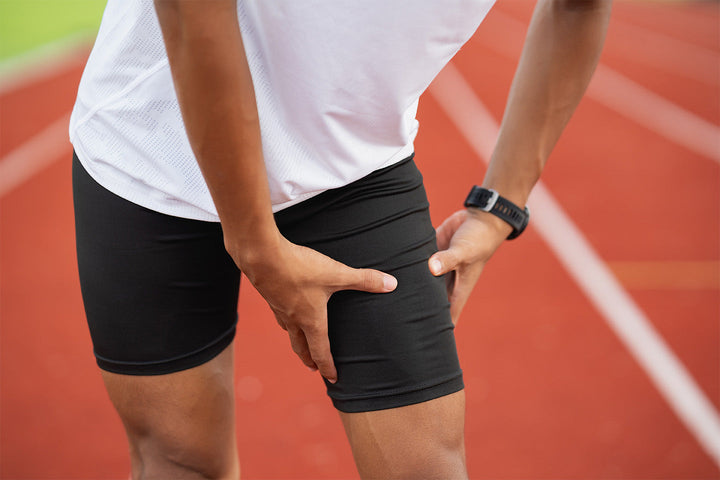

Groin pain is a common problem, especially in sports like football where rapid changes of direction and explosive movements put strain on the groin muscles. The problems often arise due to overuse, local inflammation or minor muscle tears.
What is groin pain?
The groin consists of several muscle groups, tendons, and ligaments that together contribute to movements such as bending the hip, bringing the leg inward, and extending the knee joint. When overloaded, small tears and inflammation can occur, leading to pain and stiffness. The problems are common during the colder periods of the year when the cold increases the risk of injury.
Common causes & risk factors
Groin pain is often caused by overuse related to sports, especially football (soccer) and other ball sports. Inadequate recovery between training sessions and matches, cold conditions, and insufficient warm-up increase the risk of injury. Severe, sharp pain accompanied by localized swelling may indicate a muscle tear or ligament injury and should always be taken seriously.
Symptoms
- Aching or stabbing pain in the groin
- Stiffness or weakness in the area
- Increased pain with strain, especially when changing direction
- In the event of a muscle rupture, swelling and clear local tenderness may occur.
When should you seek medical attention?
If you experience recurring pain that does not improve after modifying your activity level, or if you develop sudden severe pain accompanied by swelling, you should seek medical attention.
Recommended protection & support
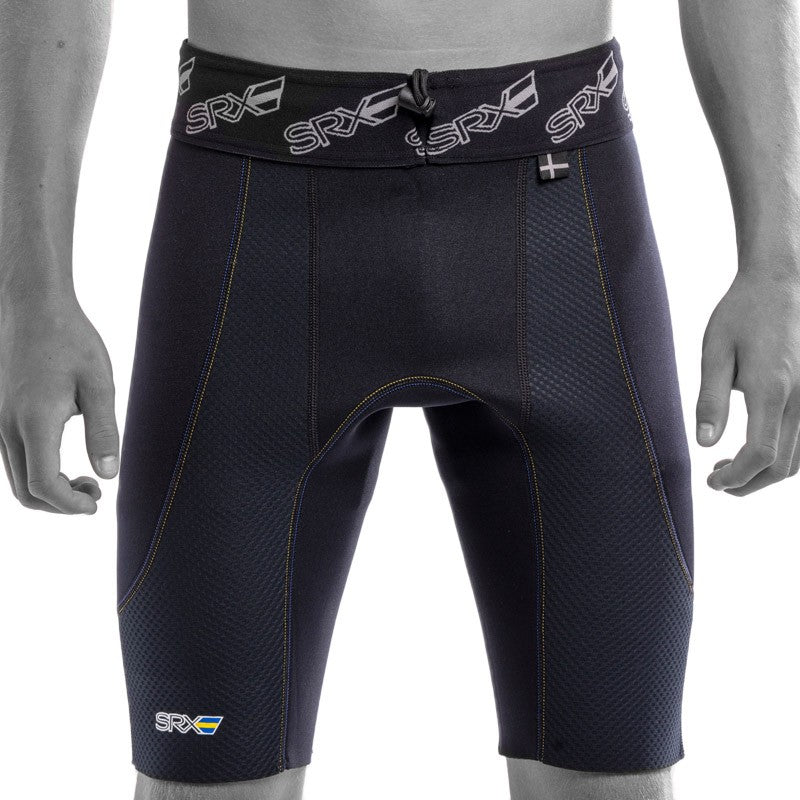
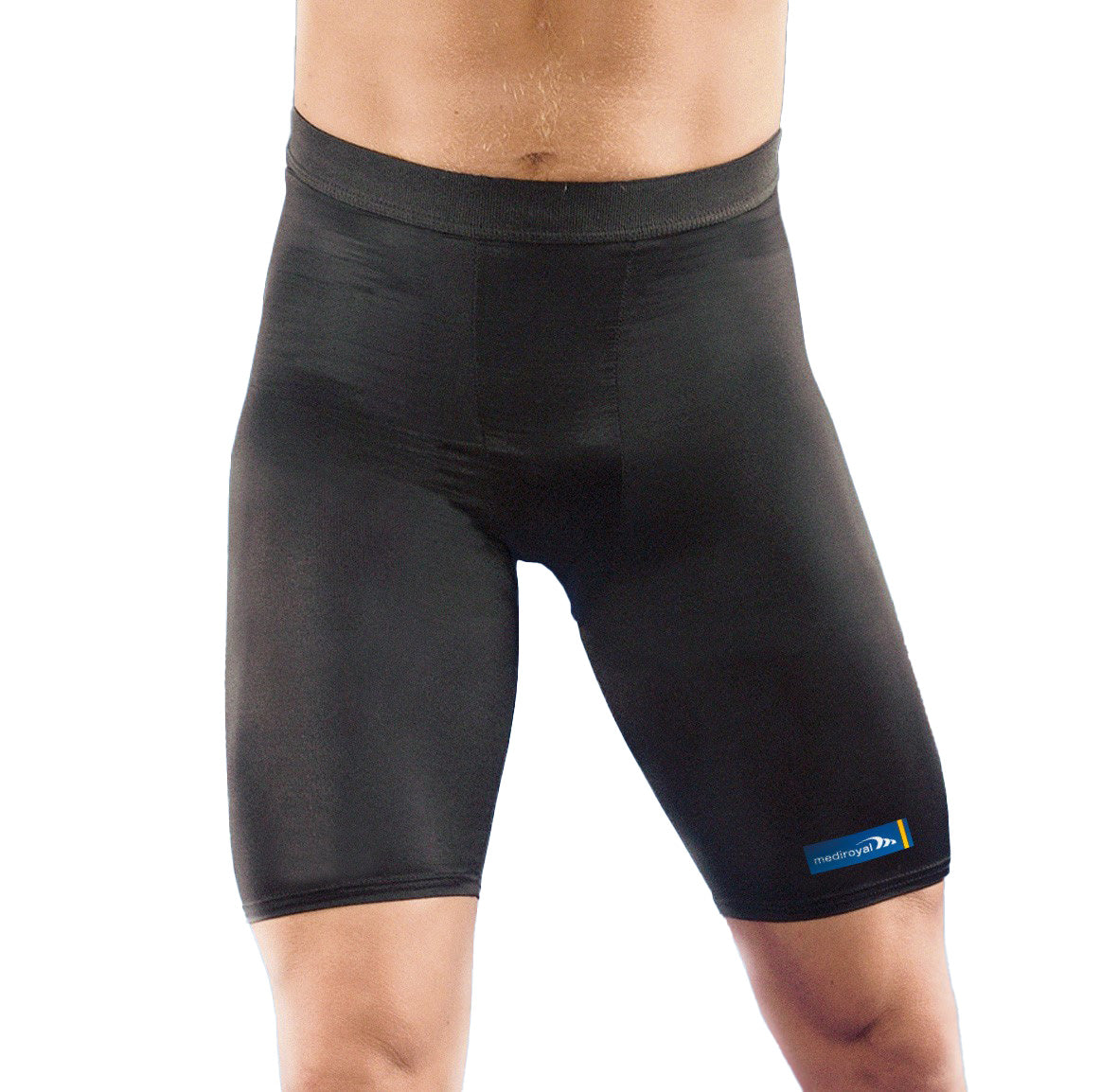
If you have groin pain, the right support and offloading can help reduce pain and provide greater confidence during activity. A warming groin support with compression helps increase blood circulation, reduce stiffness, and relieve pain during weight-bearing activities. Offloading and individually tailored exercise are important parts of rehabilitation, especially in cases of inflammation or muscle tears. For athletes, wearing warming compression shorts combined with a gradual return to training is an effective way to reduce the risk of recurring problems.
See all supports and braces that can help relieve groin pain
Related injuries
For more information about leg, calf and thigh problems, you can read more in the Injury Guide Legs, and you can also go to the Injury Guide main page to read about other injuries and symptoms.